Ayurveda is often described as India’s traditional system of medicine, but for many families it is something simpler and more personal: a set of everyday habits around food, sleep, seasons and balance, passed down from grandparents. Today, Ayurveda is practised in hospitals and clinics in India, studied in universities, sold in supermarkets worldwide and debated by scientists.
This Ayurveda for beginners guide explains the core ideas in plain language, introduces practical daily routines, and looks honestly at what modern research does and does not support. It is not medical advice. If you have a health condition, talk to a qualified doctor before making changes.
What is Ayurveda?
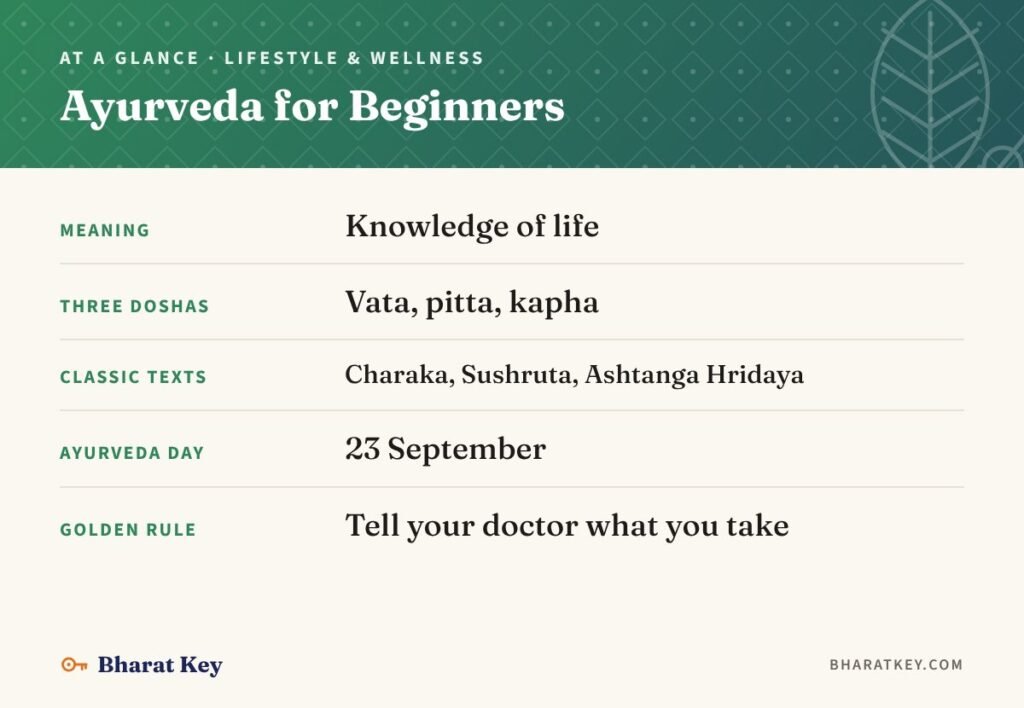
The word Ayurveda combines two Sanskrit words: ayus, meaning life, and veda, meaning knowledge. It is the “knowledge of life”. Its goal is described in classical texts as maintaining the health of the healthy and relieving the illness of the sick.
The classical texts
Ayurveda’s foundations are found in three major texts, often called the Brihat Trayi (the great three):
- Charaka Samhita: Focuses on internal medicine, diagnosis, diet and the philosophy of health.
- Sushruta Samhita: Famous for its descriptions of surgery, including procedures such as cataract couching and reconstructive surgery of the nose. Read more in our article on ancient Indian contributions to science and mathematics.
- Ashtanga Hridaya: A later synthesis attributed to Vagbhata, widely used in Kerala.
These texts developed over centuries, with scholars dating their core material broadly to the period from a few centuries BCE to the first millennium CE.
Ayurveda in India today
In India, Ayurveda is recognised as a formal system of medicine. The Ministry of AYUSH (Ayurveda, Yoga and Naturopathy, Unani, Siddha, Sowa-Rigpa and Homoeopathy) was established in 2014 to oversee education, research and regulation. Ayurvedic doctors complete a BAMS degree (Bachelor of Ayurvedic Medicine and Surgery), a five-and-a-half-year course including an internship. The government observes National Ayurveda Day, which since 2025 has been fixed on 23 September each year. The World Health Organization’s Global Centre for Traditional Medicine was established in Jamnagar, Gujarat, in 2022.
The core ideas
The five elements
Ayurveda describes everything in the universe, including the human body, as made of five elements (pancha mahabhuta): space (akasha), air (vayu), fire (agni), water (jala) and earth (prithvi). These are not chemical elements but qualities, such as lightness, movement, heat, fluidity and stability.
The three doshas
From these elements come the three doshas, functional principles that govern the body and mind:
| Dosha | Elements | Qualities | Associated functions |
|---|---|---|---|
| Vata | Air and space | Dry, light, cold, mobile | Movement, breathing, circulation, nerve impulses |
| Pitta | Fire and water | Hot, sharp, intense, oily | Digestion, metabolism, body temperature, intellect |
| Kapha | Earth and water | Heavy, stable, cool, smooth | Structure, lubrication, immunity, calmness |
According to Ayurveda, everyone has all three doshas, but in different proportions. Your natural balance at birth is your prakriti (constitution). Your current state, which may be out of balance, is your vikriti. Health is seen as a state of balance, and illness as imbalance.
Agni and digestion
Ayurveda places great emphasis on agni, often translated as digestive fire. Strong, balanced agni is considered essential for health, while weak agni is linked to the build-up of ama, a concept describing undigested or toxic residue. Many Ayurvedic recommendations, such as eating warm, freshly cooked food and avoiding overeating, aim to support digestion.
Individualised care
A central idea in Ayurveda is that what suits one person may not suit another. Recommendations for diet, exercise, sleep and treatment are meant to be tailored to the individual’s constitution, age, season, location and condition.
Daily routine: dinacharya
Dinacharya is the Ayurvedic daily routine. Many of its suggestions overlap with modern advice on sleep, hygiene and regular habits.
- Wake early. Ayurveda recommends waking before sunrise, in the period called brahma muhurta.
- Clean the mouth and tongue. Brushing and tongue scraping with a copper or steel scraper are traditional. Tongue scraping can reduce coating and may help with bad breath.
- Oil pulling (gandusha). Swishing sesame or coconut oil in the mouth for a few minutes is a traditional practice. Some small studies suggest benefits for oral hygiene, but it should not replace brushing, flossing or dental care.
- Self-massage (abhyanga). Massaging the body with warm oil before bathing is said to nourish the skin and calm the mind. Many people find it relaxing.
- Exercise. Moderate daily activity such as walking or yoga is recommended, ideally in the morning. Read our article on yoga’s journey from India to the world.
- Eat at regular times. Ayurveda suggests making lunch the main meal, when digestion is considered strongest, and eating a lighter dinner early in the evening.
- Wind down. A calm evening routine and an early bedtime support good sleep.
Seasonal routine: ritucharya
Ayurveda divides the year into seasons and recommends adjusting food and habits to each. For example:
- Winter: Warm, nourishing foods, more healthy fats, and oil massage.
- Spring: Lighter foods, bitter greens and more activity, as kapha is believed to accumulate.
- Summer: Cooling foods and drinks such as coconut water, buttermilk and fresh fruit, and avoiding the midday sun.
- Monsoon: Light, easily digestible, freshly cooked meals and boiled water, since digestion is considered weaker and infections more common.
Many of these ideas mirror common sense in a tropical climate, and they are reflected in traditional Indian food. Kerala’s monsoon is considered an especially good time for Ayurvedic therapies; see our Kerala travel guide.
Ayurvedic eating: practical ideas
You do not need to know your dosha to benefit from Ayurveda’s food wisdom. Some widely shared principles:
- Eat freshly cooked, warm meals more often than cold, processed or reheated food.
- Include all six tastes (sweet, sour, salty, pungent, bitter and astringent) in your day, as a traditional Indian thali does. Our guide to regional Indian thalis shows how.
- Use digestive spices such as cumin, coriander, fennel, ginger, black pepper and turmeric in cooking.
- Eat mindfully in a calm environment, without rushing.
- Do not overeat. A traditional guideline suggests filling half the stomach with food, a quarter with liquid and leaving a quarter empty.
- Favour seasonal and local produce.
Common Ayurvedic herbs and what we know about them
Ayurveda uses hundreds of plants. A few have become popular worldwide.
- Turmeric (haldi): Contains curcumin, which shows anti-inflammatory effects in laboratory studies. Clinical evidence for most health claims is limited, partly because curcumin is poorly absorbed. High-dose turmeric supplements have been linked to rare cases of liver injury.
- Ashwagandha: Some clinical trials suggest it may help with stress and sleep, but the studies are often small and short. There have been reports of liver problems, and it may interact with thyroid, sedative and immune-related medicines. Denmark moved to ban it in 2023 and other regulators have reviewed it, although some researchers dispute the evidence behind those decisions.
- Tulsi (holy basil): Widely used in teas. Research is limited but generally suggests it is safe in normal food amounts.
- Triphala: A blend of three fruits used traditionally for digestion and as a mild laxative. Evidence is limited.
- Ginger: Good evidence supports its use for some types of nausea.
- Brahmi: Studied for memory and cognition, with mixed and preliminary results.
The key message is that “natural” does not automatically mean safe, and that herbs can have real effects, including side effects and interactions with medicines.
Safety: what every beginner should know
- Heavy metals in some products. Some traditional Ayurvedic preparations, particularly those in the rasa shastra tradition, intentionally include metals and minerals. A widely cited study published in the Journal of the American Medical Association in 2008 found that about one in five Ayurvedic products bought online from US and Indian manufacturers contained detectable lead, mercury or arsenic. Buy only from reputable manufacturers with quality certifications, and avoid products of uncertain origin.
- Do not stop prescribed medicines. Never replace treatment for serious conditions, such as diabetes, high blood pressure, cancer, heart disease or infections, with Ayurvedic remedies without your doctor’s advice.
- Tell your doctors. Let both your doctor and your Ayurvedic practitioner know about all the medicines, supplements and herbs you take.
- Be careful in pregnancy and with children. Many herbs and treatments have not been studied for safety in these groups.
- Beware of miracle claims. Products that promise cures for serious diseases or rapid weight loss should be treated with suspicion.

Finding a qualified practitioner
- In India, look for practitioners with a BAMS or higher degree, registered with the state board or the national commission for Indian systems of medicine. Government Ayurveda hospitals and colleges are reliable places to start.
- Abroad, regulation varies widely. In many countries, Ayurveda is not regulated as a medical profession. Ask about training, qualifications and professional memberships.
- At wellness resorts, check whether treatments are supervised by qualified doctors, and be clear about whether you are seeking relaxation or treatment.
- Official information on AYUSH systems is available from the Ministry of AYUSH.
Panchakarma explained
Panchakarma, meaning “five actions”, is Ayurveda’s intensive detoxification and rejuvenation programme. It typically involves preparatory oil and steam treatments, followed by therapeutic procedures that may include induced vomiting, purgation, enemas, nasal treatments and, rarely in modern practice, bloodletting. A full programme can last two to four weeks under supervision.
Panchakarma is physically demanding and is not a spa treatment. It should only be undertaken after a medical assessment, in a reputable centre with qualified doctors.
Kitchen traditions inspired by Ayurveda
Many Indian households use simple preparations rooted in Ayurvedic thinking, usually for comfort rather than treatment:
- Haldi doodh (turmeric milk): Warm milk with turmeric, a pinch of black pepper and sometimes ginger or cardamom, traditionally taken at bedtime or during a cold. Abroad it is often sold as the “golden latte”.
- Jeera water: Cumin seeds boiled in water, sipped after meals to aid digestion.
- Ajwain (carom seeds): Chewed with a little salt or steeped in water for indigestion and bloating.
- Ginger and honey: A spoonful of ginger juice with honey for a sore throat. Do not give honey to infants under one year old.
- Kadha: A spiced herbal decoction of tulsi, ginger, black pepper, cinnamon and cloves, which became especially popular during the COVID-19 pandemic.
- Buttermilk with roasted cumin: A cooling drink served with lunch in the summer.
These are generally safe in normal food amounts for most adults, but they are not substitutes for medical care. If symptoms are severe or persistent, see a doctor.
Myths and facts
Myth: Ayurveda has no side effects because it is natural.
Fact: Herbs and treatments can cause side effects and interact with medicines, and some products have been found to contain contaminants.
Myth: You need to know your dosha before you can benefit.
Fact: Many Ayurvedic lifestyle principles, such as regular routines, fresh food and adequate sleep, are useful for almost everyone.
Myth: Ayurveda is only about massages and spas.
Fact: Spa treatments are one small, commercial part of Ayurveda. In India it is also a system of medical education, hospitals and research.
Myth: Ayurveda and modern medicine cannot work together.
Fact: Many hospitals and researchers in India study integrative approaches, and patients commonly use both. The key is coordination and honesty with all your healthcare providers.
Bringing Ayurveda into modern life
For most people, the most useful parts of Ayurveda are its everyday habits: regular sleep, freshly cooked meals, mindful eating, seasonal routines, movement and attention to how the body feels. These ideas fit comfortably alongside modern medicine and are a reminder that health is shaped by daily life, not only by treatment.
Key takeaways
- Ayurveda is a traditional Indian system of health based on balance among the three doshas: vata, pitta and kapha.
- Daily and seasonal routines, mindful eating and good sleep are its most accessible practices.
- Some herbs show promise in research, but evidence is often limited and side effects are possible.
- Buy products only from reputable sources and consult qualified practitioners and your doctor.
- Never replace treatment for serious illness with Ayurvedic remedies without medical advice.
Frequently asked questions
What are the three doshas in Ayurveda?
Vata (air and space), pitta (fire and water) and kapha (earth and water). Ayurveda holds that everyone has all three in different proportions.
Is Ayurveda scientifically proven?
Some Ayurvedic practices and herbs have shown promising results in studies, while many claims have not been tested rigorously or have produced mixed results. Research continues in India and elsewhere.
Is Ayurveda safe?
Lifestyle practices such as healthy eating, regular routines and gentle exercise are generally safe. Some herbal products can cause side effects, interact with medicines or contain contaminants. Use products from reputable sources and consult qualified professionals.
When is National Ayurveda Day?
Since 2025, National Ayurveda Day has been observed in India on 23 September each year.
Can I practise Ayurveda alongside conventional medicine?
Many people do. Always tell your doctor about any Ayurvedic treatments or supplements, and never stop prescribed medicines without medical advice.